Why Web Development Is Still One of the Best Skills You Can Learn Today

8 mins read
Last June 16, I received a message from one of my former professors at my alma mater, Cagayan State University, inviting me to be a resource speaker for their Tracking Orientation event. The audience? 2nd year IT students who are about to choose their major track as they prepare to enter their 3rd year in college.
I had the opportunity to orient incoming 3rd year IT students who are considering Web Development as their chosen track.
I’m not a great speaker, and I don’t consider myself a good writer either. Honestly, I didn’t even feel qualified to orient students about their future — but I accepted the invitation anyway. Despite a hectic schedule, I made time to prepare a presentation.
I started with a simple question: “Why did I choose web development?”
For the past year, I worked as a Systems Administrator. I managed physical servers — Dell, VMware, Nutanix — handled domain controllers, configured Active Directory, enforced group policies. I spent a year deep in the world of infrastructure, maintaining and monitoring enterprise-level systems.
But there’s one thing I couldn’t let go of: web development.
Even after long hours at work, I would spend my free time learning new web technologies, building small projects, and diving into my stack — mostly using Next.js. One of my favorite tools has been daily.dev. I’m not someone who enjoys reading a lot, but the content there is engaging enough that I find myself reading anyway.
Eventually, I made the leap. I quit my job as a Systems Admin to pursue web development full-time.
Why web development?
Honestly, I don’t have a perfectly logical answer — I just know I love building things. Whether I’m starting from scratch or experimenting with new libraries and tools, it’s something that fuels me. Armed with curiosity, Google, and the willingness to figure things out, that’s all I really need to get going.
If you’re still unsure about which career path to pursue, here are some thoughts I shared during the orientation on why web development remains one of the most valuable skills you can learn today.
Anyone can be a web developer

The web development is one of the most accessible entry points into tech — with free learning resources, interactive tutorials, and communities ready to help.
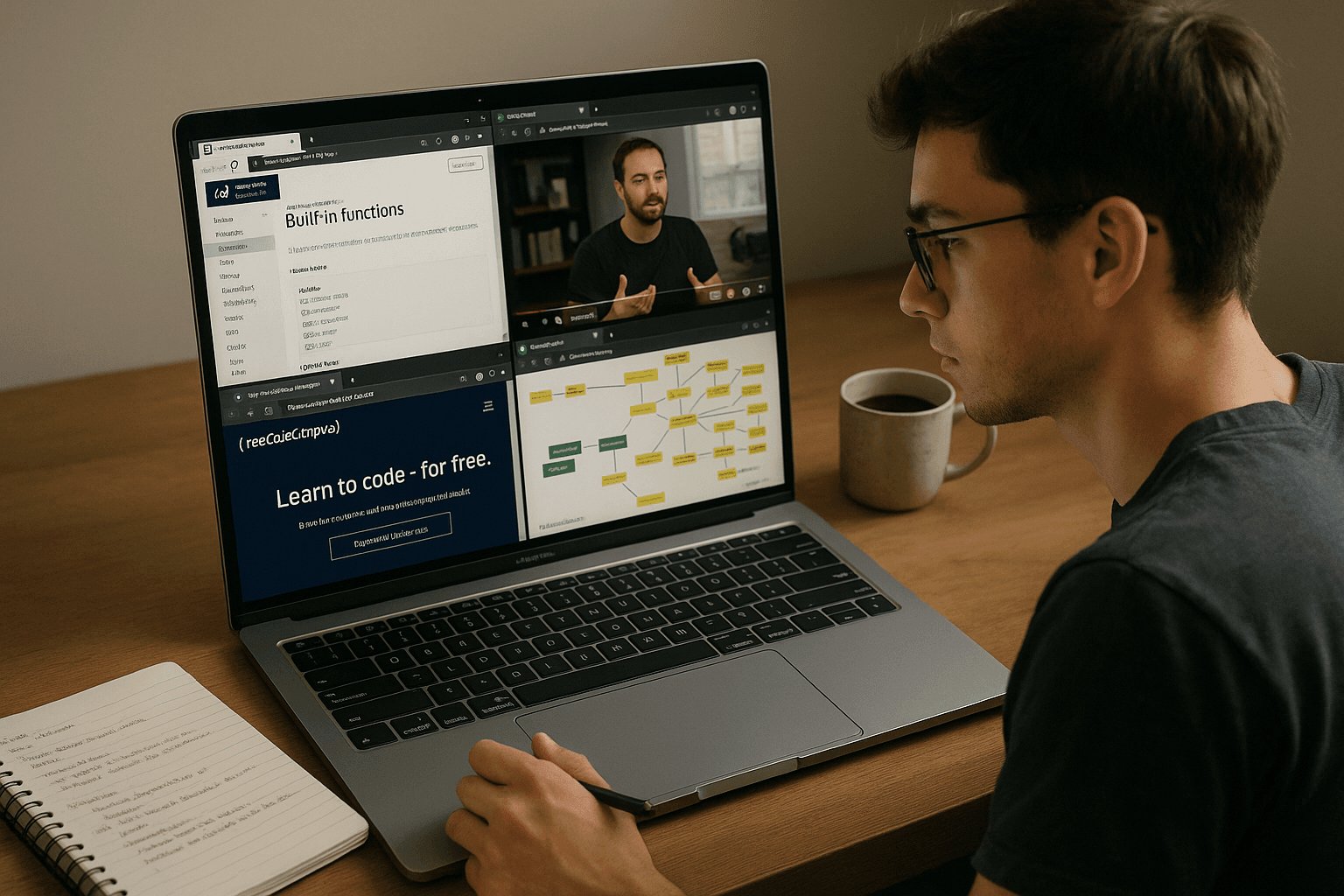
Whether you're watching coding videos on YouTube, building your first HTML page on freeCodeCamp, or getting instant answers from an AI assistant like ChatGPT, you're already part of the journey.
Web development rewards curiosity, creativity, and persistence — and with the tools available now, there’s nothing stopping you from going from complete beginner to building real projects that people actually use. The barrier to entry has never been lower — you just need to start.
Freelance and Remote opportunities

One of the biggest advantages of web development is location and schedule flexibility. As a web developer, you’re not limited to working in a traditional office — you can work remotely, from home, a coffee shop, or even another country. Companies around the world hire developers remotely, especially for frontend, backend, and full-stack roles.
If you prefer working on your own terms, you can go the freelancing— building websites or apps for clients, startups, or small businesses. Freelancing lets you:
- Choose your own projects
- Set your own rates
- Build a personal brand or portfolio
- Potentially earn while you’re still in school
Startup and Saas (Software as a service)

If you don’t want to work for someone else, you can build your own company. Whether it's a service-based business, a SaaS product, or a digital agency, web development gives you the power to create and launch real solutions for real people.
Web development gives you the tools not just to earn — but to express, create, and build your own path.
I’m a big fan of content creators who document their journey building SaaS products — seeing how they think, solve problems, and ship fast really motivates me to keep building too:
- Your Average Tech Bro - @YourAverageTechBro
- Edmund Yong - @edmundyong
- Tom Gregory - @TomGregoryTech
How To Get Started
If you’re now feeling more confident about choosing web development, here’s a simple path to help you get started:
Start with the basics

Learn the fundamentals of web development, build up your knowledge on how the website works. Start by learning HTML, CSS and JavaScript, these are the core foundation.
You don’t need to master them perfectly, just get comfortable enough to build simple static webpages.
Start building webpages using HTML first, then try to style it with CSS. If you are comfortable with both, you can add some logics to it by using JavaScript. Create login and signup forms. Create simple system that applies CRUD (Create, Read, Update and Delete). Example Todo lists.
At this point, as much as possible avoid using ChatGPT create the website for you. Allow yourself to search in the Google and browse different resources like StackOverflow, w3schools, geeks for geeks, read forums etc.
It helps you practice thinking through problems — and the better your questions, the better you get at Googling your way to the answers. Trust me on this.
Move into Frameworks and Databases

Once you're comfortable with the basics of HTML, CSS, and JavaScript, the next step is to explore modern frameworks and databases — the tools that power real-world web applications.
Start with React, one of the most popular JavaScript frameworks for building user interfaces. It helps you create dynamic, interactive web apps more efficiently, using components that are easy to manage and reuse.
For the backend, learning Node.js allows you to write server-side logic using JavaScript — the same language you're already using on the frontend. This opens the door to handling form submissions, APIs, authentication, and more.
To store and manage your data, you'll need to understand databases. MySQL is a great choice for structured, relational data (think: tables and relationships), while MongoDB is a flexible NoSQL option ideal for fast, scalable apps.
Together, these tools make it possible to build full-stack applications — websites that not only look great but also handle data, users, and logic behind the scenes.
Build Real Projects

When I say "real projects", I say "projects that solves real-world problems" not just todo-lists or a calculator app. You need to build projects that provides real-world solutions.
This will progress your knowledge by building complex systems, applying different approaches, learning systems design, creating system flow, authentication and authorization, handling session tokens etc.
At this point you can integrate AI in your web projects. I mean you really should!
I personally recommend doing this because this is how I learn, I learn by doing. This is how I strengthened my knowledge on web development by doing real projects.
You can still watch tutorials on YouTube, but as much as possible create a project that will apply whatever you learned on the tutorial you just watch, dont just rely on the tutorial. Create your own.
I know it’s not always easy to come up with project ideas — that’s totally normal. But here’s a simple tip: start with a problem you’re already facing. Think of something that annoys you, something repetitive you always do manually, or a small task that takes too much time. Now imagine building a website or a tool to solve that problem. That’s your first project right there — and the best part? You already understand the problem deeply, so you’re one step ahead.
Build a portfolio

As you learn, you need to document everything. Every process, every errors you faced, every breakthrough, EVERYTHING. Compile it and create your portfolio. Most recruiters are looking for people who knows how to solve a problem through systems.
Documenting and collecting your projects into your portfolio will open dorrs for opportunities like internships, freelance gigs or even you very first dev job.
Your portfolio doesn’t need to be the most creative or the flashiest — it just needs to represent you. Focus on showcasing who you are, what you’ve built, and what you’re learning. That’s more than enough.
Conclusion
Web development isn’t just a career path — it’s a gateway to the future. And that future includes AI. The people who will thrive aren’t the ones afraid of change — they’re the ones who adapt, build, and use the tools available to them.
You don’t have to be an expert on day one. You just have to start. Learn the fundamentals, build your projects, and don’t be afraid to use AI — not as a crutch, but as a power tool to amplify your skills.
Web development gives you the power to create, to work from anywhere, to freelance, to launch your own startup — and to grow alongside the most powerful technologies of our time.
Written by